For many people, religion does not begin as a choice. It becomes part of life almost without notice, shaped by family habits, cultural influence, and everyday experiences. Christianity, in many cases, settles into a person’s thinking early on, quietly guiding how they view right and wrong, how they understand purpose, and how they make sense of the world. Because these ideas are introduced so naturally, they rarely feel like something to examine. They feel familiar, steady, and simply true.
But as time passes, something begins to change. People grow, experience new environments, and encounter different ways of thinking. This often brings a quiet moment of reflection. Not a rejection, not a conflict, but a simple and honest question: Why do I believe this? What once felt obvious now invites curiosity. This is where the philosophy of religion begins to matter, not as a challenge to belief, but as a way to understand it more deeply and clearly.
What is the Philosophy of Religion?
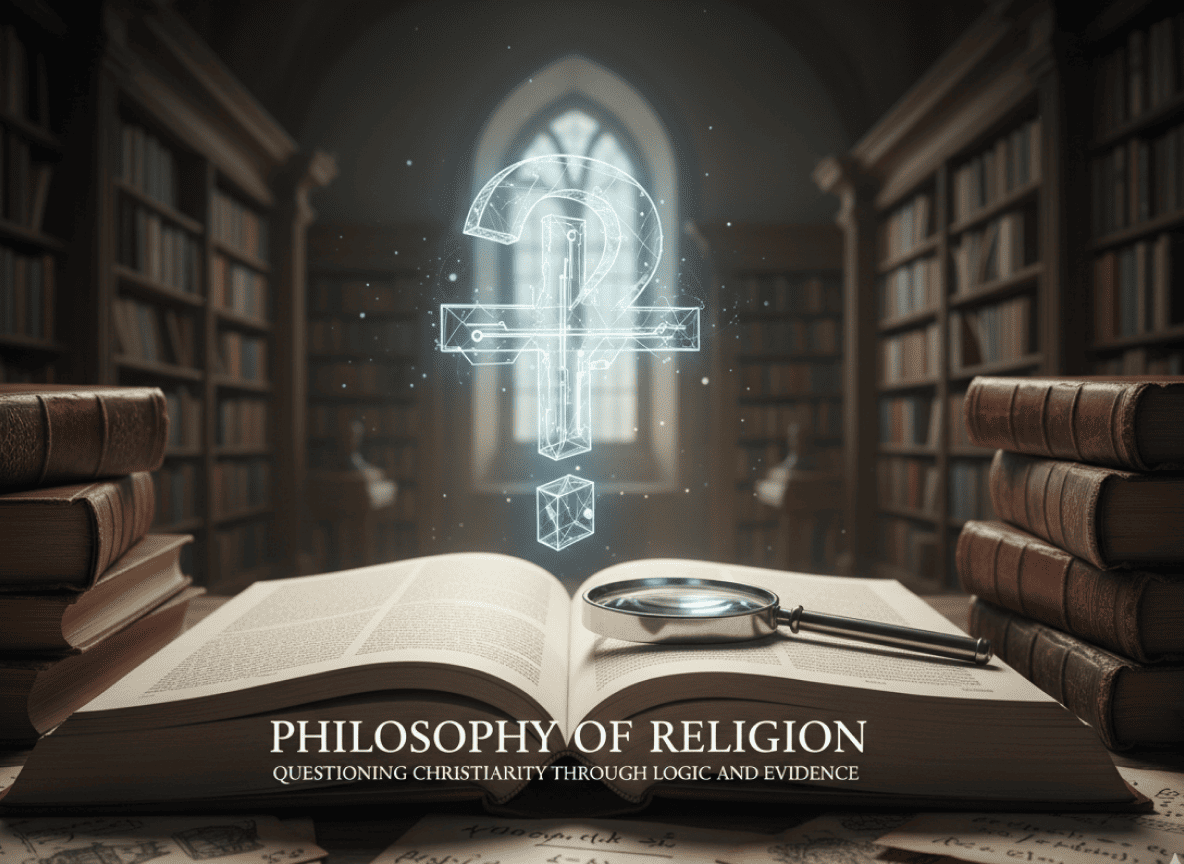
The philosophy of religion is less about giving answers and more about encouraging thoughtful exploration. It invites people to pause and look at belief from a different angle. Instead of asking whether something is right or wrong, it asks deeper questions. Where do these beliefs come from? What supports them? How have they changed over time?
When this kind of thinking is applied to Christianity, it opens the door to a more aware and intentional perspective. Familiar teachings are no longer just accepted at face value. They are considered, reflected on, and understood in a new way. This process does not create distance from faith. In many cases, it brings a stronger and more personal connection to it because the belief is no longer automatic, but meaningful.
Why Questioning Christianity Feels So Personal?
Questioning Christianity can feel different from questioning other ideas, because it is closely tied to personal history. It connects to childhood memories, family traditions, and a sense of belonging that has been built over time. So when questions begin to appear, they can feel heavier than expected. It is not just about ideas, but about identity.
Still, asking questions does not mean something is being lost. In fact, it often means the opposite. It shows a willingness to take belief seriously rather than simply carrying it forward without thought. What happens when someone pauses and asks, Do I truly understand what I believe? That moment creates space for a more honest connection. Instead of following beliefs out of habit, individuals begin shaping their own understanding, one that feels more real and personal.
Looking at Christianity Through Logic
As curiosity starts to grow, many people naturally begin to look at Christianity through a more logical lens. This is not about trying to tear belief down or prove it wrong. It is more about trying to make sense of it. How do different teachings fit together? Do the ideas support each other, or do they raise new questions when placed side by side?
When someone takes the time to think things through, patterns begin to stand out. Certain concepts feel clear, while others may not fully add up at first. That is where deeper reflection comes in. Instead of brushing questions aside, people begin to sit with them and work through them slowly. Logical thinking, in this way, does not take belief away. It helps shape it into something more thoughtful, something that feels understood rather than simply carried along.
Evaluating Christianity With Evidence
At some point, reflection often moves beyond logic and into evidence. People begin to look into history, written records, and general knowledge to get a clearer picture of religious claims. They might ask themselves, What can be traced back? What is supported, and what relies more on faith? These questions do not come from doubt alone, but from a genuine desire to understand things more clearly.
As individuals look into different sources, they start to sort things out in their own way. Some ideas feel grounded in evidence, while others remain matters of belief. This does not mean one cancels out the other. Instead, it creates a more balanced way of thinking, where faith and understanding are both given space. Over time, this process helps build a perspective that feels more informed and personally meaningful.
The Role of Interpretation in Belief
One thing many people do not fully realize at first is how much interpretation shapes belief. Religious texts are rarely as straightforward as they may seem on the surface. The way they are explained, taught, and understood can vary depending on who is reading them and in what context. Because of this, the same passage can be understood in different ways.
When people begin to notice this, it often changes how they approach belief. They start to see that understanding is not fixed in one form. It is influenced by time, culture, and perspective. This realization can feel eye-opening. It allows individuals to step back, look at things from different angles, and remain open to deeper insight. Instead of holding onto a single explanation, they begin to explore what meaning makes the most sense to them.
Moving From Assumption to Understanding
As reflection deepens, a quiet shift begins to take place. Belief is no longer something that runs in the background without attention. Instead, people start to slow down and look at it more carefully, taking time to think rather than simply going along with what they have always known.
Gradually, belief becomes more personal. Instead of depending only on what they were taught, individuals begin to form their own understanding. Questions like Does this make sense to me? help bring clarity. Over time, belief feels less like a habit and more like something shaped by thought, awareness, and personal meaning.
A Thoughtful Resource for Deeper Exploration
For those who want to explore these ideas further, The Mythology of Christianity by David Vaticus offers a clear and approachable path. The book takes a closer look at Christianity through logic, historical background, and careful observation, helping readers break down complex ideas into something easier to follow. Instead of overwhelming the reader, it gradually opens up different ways of thinking and encourages a deeper level of understanding.
What makes this book stand out is its balanced approach. It does not try to push readers in a specific direction or tell them what to believe. Instead, it invites them to explore, reflect, and draw their own conclusions at their own pace. For anyone interested in the philosophy of religion or trying to make sense of Christianity in a more thoughtful way, it serves as a helpful guide that supports curiosity without pressure.
Last Words
Looking at Christianity through the philosophy of religion allows people to move beyond surface-level thinking and engage with belief in a more meaningful way. When logic, evidence, and reflection come together, they create space for a clearer and more grounded understanding of ideas that are often taken for granted.
Rather than taking belief away, this process often adds depth to it. It encourages individuals to slow down, ask honest questions, and stay open to new perspectives. In doing so, they begin to build a view of belief that feels more personal, more thoughtful, and more connected to their own understanding.