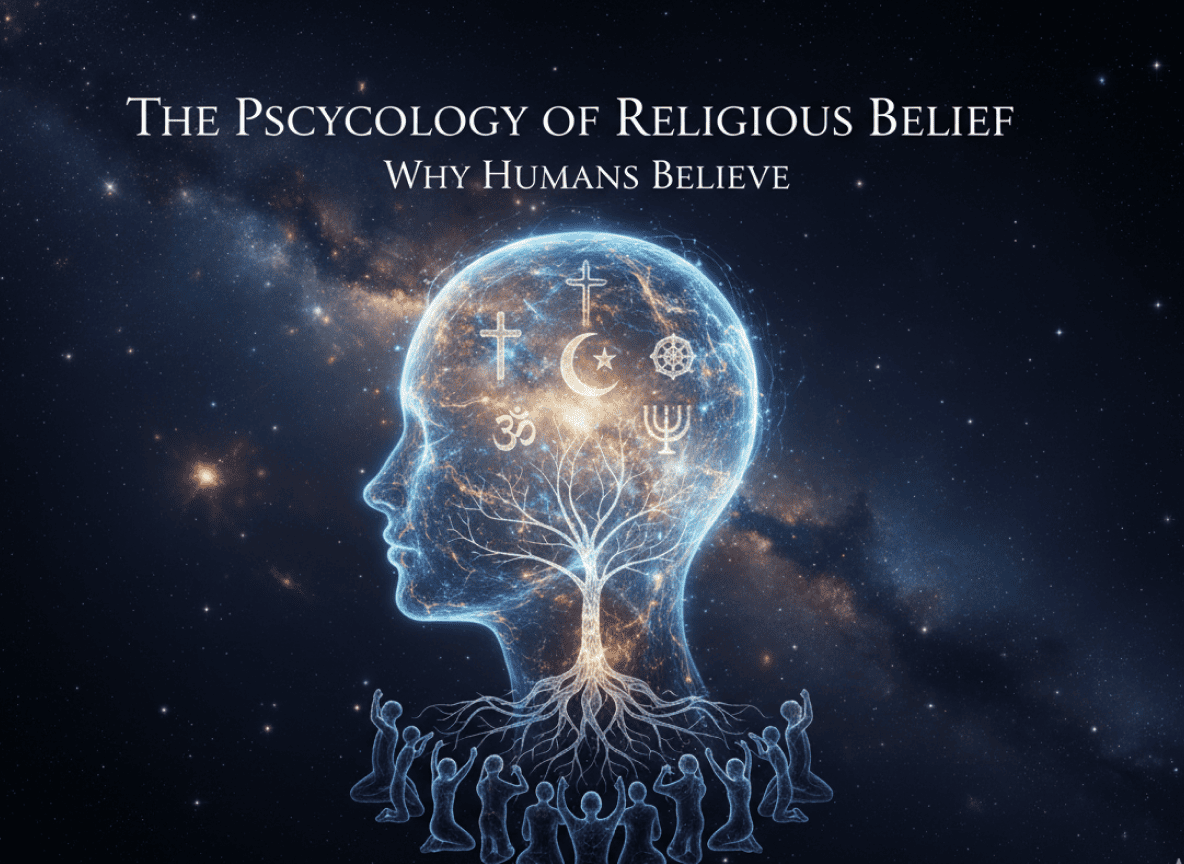
Religion has been part of human life for thousands of years. Across different cultures, countries, and time periods, people have believed in something greater than themselves. This raises an important question: why do humans believe at all? Is it purely spiritual, or is there something deeper happening in the mind?
The psychology of religious belief helps us understand this question from a human perspective. It looks at how thoughts, emotions, and experiences shape faith. Instead of focusing only on doctrine, it explores the reasons people are drawn to belief in the first place. By understanding the connection between religion and psychology, we can see that belief is not just about faith, but also about how the human mind works.
Why Humans Naturally Seek Meaning
One of the main reasons people turn to religion is the natural human desire to find meaning. Life can feel confusing, especially when we think about questions like why we exist or what happens after death. Religion offers answers to these big questions, giving people a sense of direction and purpose.
From the perspective of religious belief psychology, this need for meaning is deeply rooted in the human mind. People are naturally curious and want clear explanations for complex ideas. Religion provides a structured way to understand life, which can feel comforting and reassuring.
The Role of Fear and Uncertainty
Fear is another powerful factor in the psychology behind faith. Humans are aware of their own mortality, and this awareness can create anxiety. Questions about death, the unknown, and the future often lead people to seek comfort in belief.
Religion helps reduce this fear by offering hope and a sense of control. It provides answers about life after death and gives meaning to suffering. In this way, belief becomes a way to cope with uncertainty.
How Childhood Shapes Belief
Many people adopt their beliefs early in life. Children often learn religion from their families and communities, and these ideas become familiar and trusted over time.
In religious belief psychology, early exposure plays a key role. When children grow up hearing certain beliefs, they are more likely to accept them as truth. These beliefs can stay with them into adulthood, even if they later begin to question them.
The Power of Community and Belonging
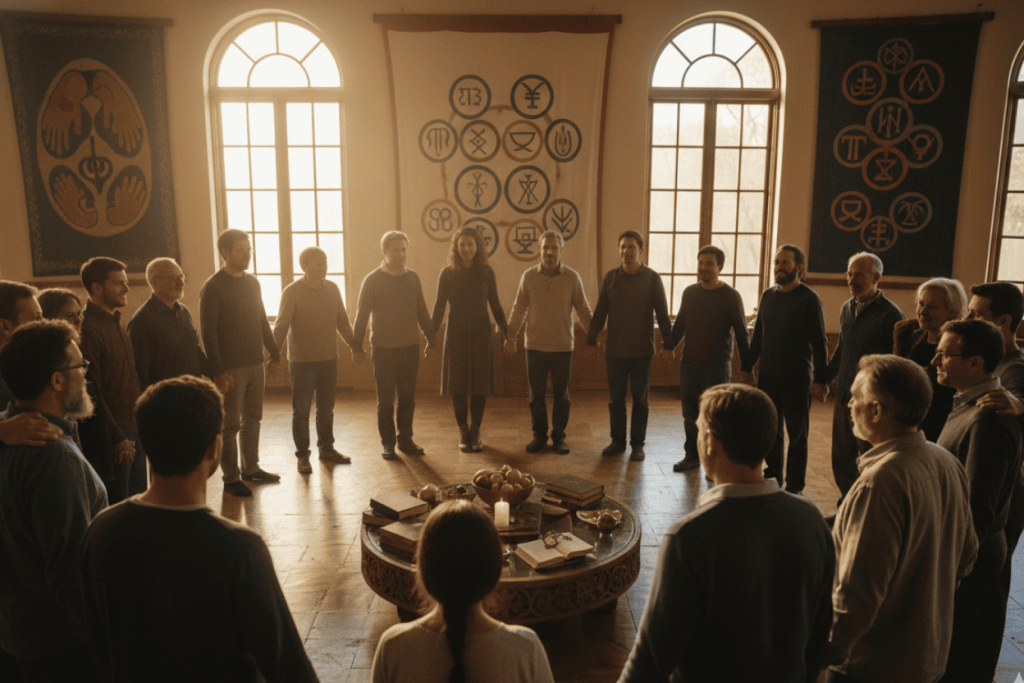
Religion is not just a personal experience. It is also deeply social. Being part of a religious group provides a sense of belonging and connection. People gather, share values, and support each other through difficult times.
From the viewpoint of religion and psychology, this sense of community is very important. Humans naturally seek connection, and religion offers a shared identity. This can strengthen belief, as people feel supported and understood within their group.
Cognitive Patterns That Support Belief
The human brain is wired to look for patterns and meaning. People often try to explain events by connecting them to something greater. This is where the psychology behind faith becomes clear.
For example, when something unexpected happens, people may see it as a sign or purpose rather than a coincidence. The brain prefers meaningful explanations, and religion provides them. This natural tendency makes belief feel logical and real to many individuals.
Emotional Comfort and Hope
Religion often provides emotional support, especially during difficult times. When people face loss, stress, or uncertainty, belief can bring comfort and hope.
The psychology of religious belief shows that emotions play a major role in faith. People are more likely to hold onto beliefs that make them feel safe and supported. Hope is a powerful force, and religion often offers it in times when it is needed most.
Cultural and Social Influence
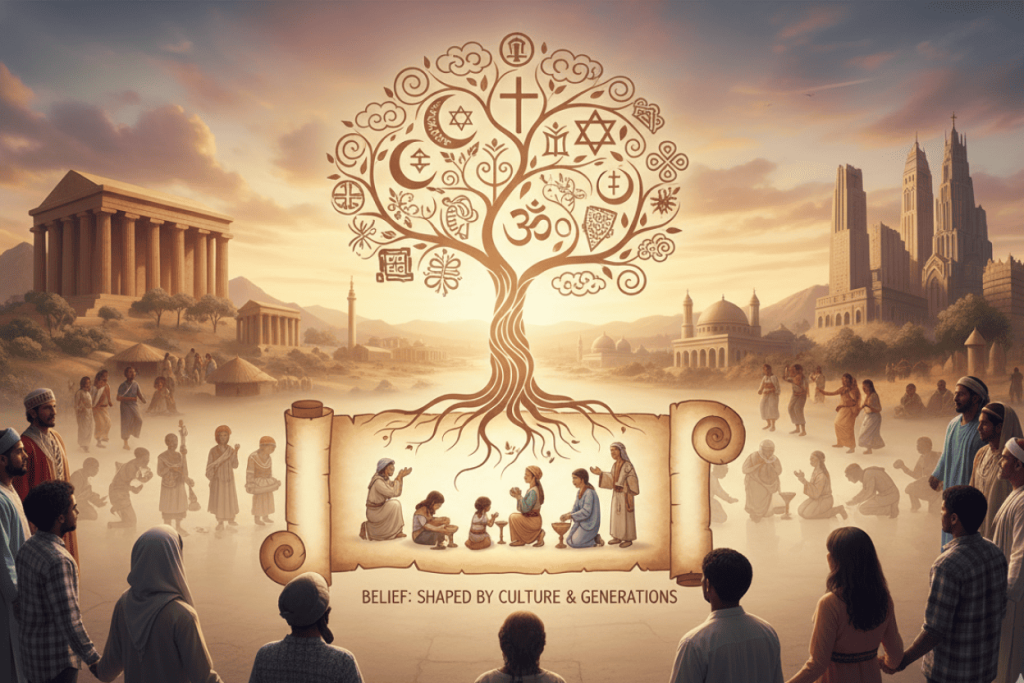
Belief is also shaped by culture. Different societies have different religions, traditions, and practices. These are passed down from generation to generation and become part of a person’s identity.
In terms of religious belief psychology, culture acts as a strong influence. People often believe what those around them believe. This does not mean the belief is false, but it shows how social environments shape faith. Religion becomes not just a personal choice, but also a cultural experience.
Doubt, Questioning, and Personal Growth
Not everyone accepts belief without question. At some point, many people begin to reflect on what they have been taught. They may explore different ideas, ask questions, or even change their beliefs.
The psychology behind faith includes this process of doubt and growth. Questioning does not always lead to rejection. For some, it leads to a deeper and more personal understanding of belief. In fact, books like The Mythology of Christianity explore how religious ideas, symbols, and traditions have evolved over time, helping readers connect psychological insight with historical context in a more thoughtful way.
Conclusion
The psychology of religious belief shows that faith is not based on just one reason. It is shaped by a mix of emotions, experiences, culture, and human thinking patterns. From fear and hope to community and curiosity, many factors influence why people believe.
Understanding religious belief psychology does not mean judging or rejecting faith. Instead, it allows us to see belief as a natural part of being human. Whether someone is deeply religious or simply curious, exploring the psychology behind faith can lead to greater understanding, empathy, and open-minded thinking.