Top 10 Biblical Contradictions You Won’t Hear in Church
Top 10 Biblical Contradictions You Won’t Hear in Church
For many people, the Bible is something they grew up with. They hear its stories in church, from family, or in school, and over time, those stories feel complete and consistent. Most people focus on the message rather than the details, which is why certain differences often go unnoticed.
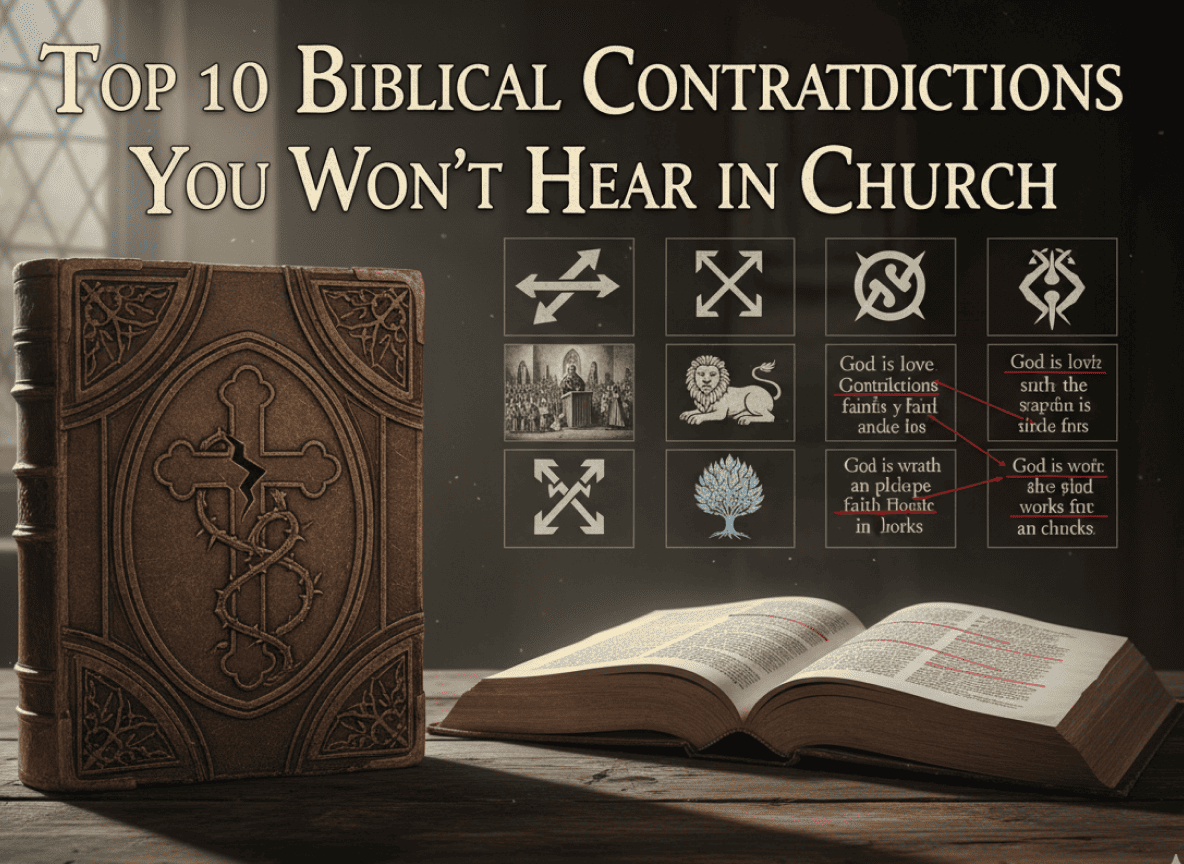
When someone reads more carefully and compares passages side by side, they may begin to notice biblical contradictions or biblical inconsistencies. These differences do not always mean something is wrong. In many cases, they show how stories were told from different viewpoints. Exploring the most common contradictions in the Bible can help readers understand the text in a deeper and more thoughtful way.
What You Need to Know First
The Bible was written over a long period of time by different authors, each with their own purpose, audience, and background. Because of this, the way events are described can vary from one book to another. Understanding this context is important, as it helps explain why some details do not fully match and why certain differences appear in the text.
Another key factor is translation. The Bible has been translated into many languages over centuries, and even small changes in wording can affect meaning. This is especially noticeable when looking at contradictions in the New Testament, where similar events are described in different ways across the Gospels.
The Contradictions People Often Notice
When readers begin to study the Bible more closely, they often come across passages that seem to tell the same story in different ways. These are not always obvious at first, but once noticed, they raise important questions. The examples below are some of the most common contradictions in the Bible that people discuss when exploring biblical inconsistencies.
Two Versions of Creation
The book of Genesis begins with two creation stories. The first describes a clear order over six days, ending with humans. The second tells the story in a different sequence, where man appears earlier. This is one of the most common contradictions in the Bible and often leads readers to question how the accounts fit together.
Jesus’ Family Line Looks Different
In the New Testament, the Gospels of Matthew and Luke both provide a genealogy of Jesus, but the names listed are not the same. This difference is often discussed among contradictions in the New Testament. Some believe the lists serve different purposes, while others see them as conflicting records.
Who Carried the Cross
One Gospel describes Jesus carrying his own cross, while another says a man named Simon helped him. This variation may seem minor, but it is often included in lists of biblical contradictions because it shows how the same event can be described differently.
Judas’ Death Is Described Differently
The death of Judas Iscariot is explained in two ways. One account says he hanged himself, while another describes him falling and dying in a field. These two versions are difficult to combine, making this one of the clearer biblical inconsistencies.
The Resurrection Story Changes Depending on the Gospel
The resurrection is a central event, yet the details differ across the Gospels. The number of people at the tomb, the timing, and what they see are not exactly the same. These differences are among the most discussed contradictions in the New Testament and often raise questions about how the story was recorded.
God Is Described in Different Ways
In some passages, God is shown as loving, patient, and forgiving. In others, He appears strict and punishing. This contrast is often seen as one of the key biblical inconsistencies. Some readers interpret it as a balance between justice and mercy, while others see it as a difference in portrayal.
Can Anyone See God
One part of the Bible states that no one has seen God, yet other passages describe people seeing or speaking directly with Him. This creates confusion and is often included among biblical contradictions discussed by readers and scholars.
Faith or Actions, Which Matter More
Some teachings emphasize faith as the path to salvation, while others highlight the importance of good actions. This tension has been debated for centuries and is one of the most common contradictions in the Bible. Many believers understand these ideas as working together rather than opposing each other.
How Many Animals Were on the Ark
In the story of Noah’s Ark, one passage mentions two of each animal, while another suggests more in certain cases. This detail is often pointed out as a clear example of biblical inconsistencies and reflects how different traditions may have been combined.
When Will the End Come
Some verses suggest the end of the world would happen soon, even within the lifetime of early believers. Other passages are less specific. This topic is frequently discussed when exploring contradictions in the New Testament, especially regarding expectations about the future.
Why These Differences Exist
The Bible was written across many generations, which means each author had a different perspective. This naturally led to variations in how events were recorded and explained.
Before being written, many stories were shared orally. As they were passed from one generation to another, small changes could have been introduced. These variations later became part of the written text.
Language also evolves over time, and translation can affect how words and ideas are understood. This is one of the main reasons why biblical inconsistencies appear in different versions of the Bible today.
A Deeper Look at These Questions
If these ideas have sparked your curiosity, exploring them further can be helpful. The book The Mythology of Christianity takes a deeper look at biblical contradictions and how these stories developed over time. It explores the history, symbolism, and interpretations behind Christian beliefs in a thoughtful and engaging way.
For readers who want to go beyond surface-level understanding and explore the most common contradictions in the Bible with a more analytical perspective, this book offers valuable insights and a fresh way of thinking.
Final Thoughts
Exploring biblical contradictions can feel challenging at first, especially for those who have always seen the Bible as completely consistent. However, asking questions does not weaken understanding. Instead, it encourages deeper thinking and reflection.
For some readers, these differences represent multiple perspectives of the same truth. For others, they highlight the human role in shaping religious texts. Either way, studying the most common contradictions in the Bible helps create a more thoughtful and informed view, allowing readers to engage with the text in a meaningful way.