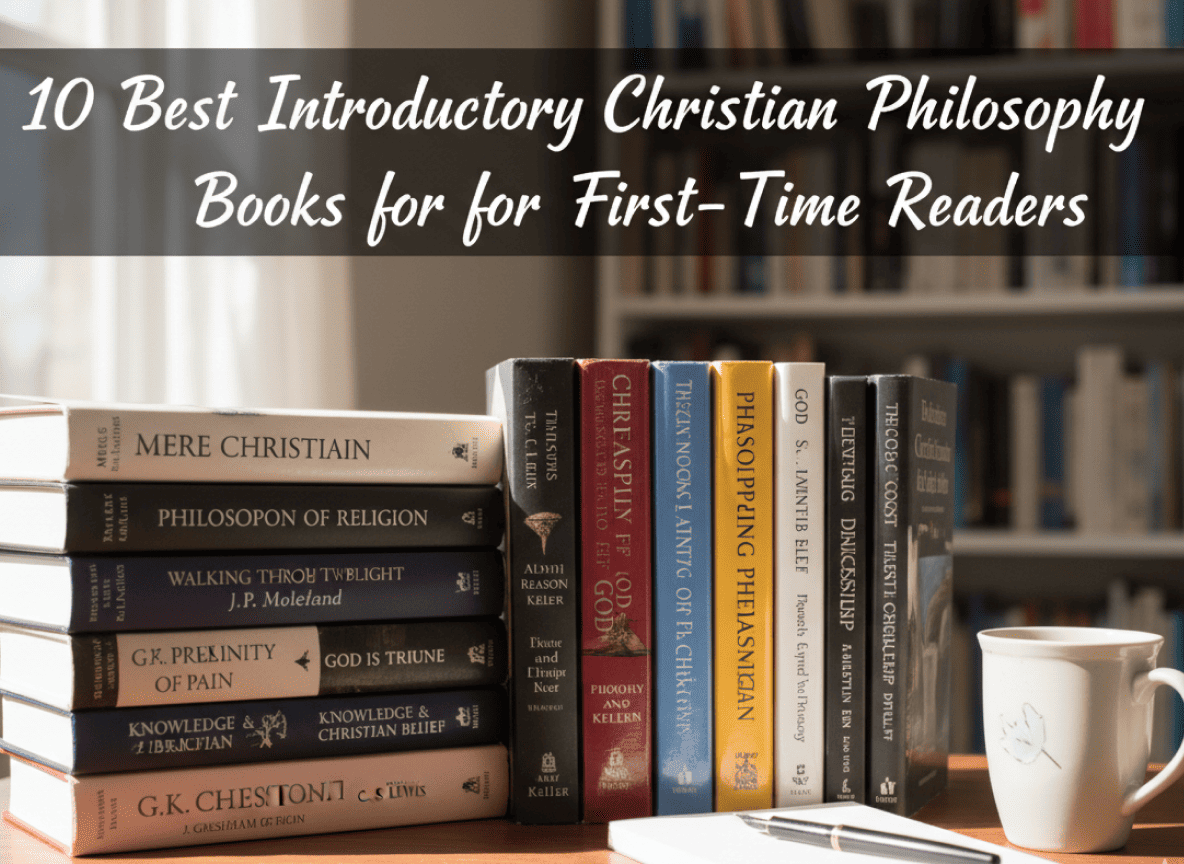
Many people grow up with beliefs they rarely pause to examine. These ideas are often accepted early and carried forward without much reflection. Christian philosophy creates space to look at those beliefs more carefully. It helps us understand not just what people believe, but why those beliefs exist and how they continue over time.
For beginners, the biggest challenge is knowing where to start. Some books feel too complex, while others do not go deep enough. The right starting point should feel clear, balanced, and easy to follow. This list brings together some of the best Christian philosophy books that explain, question, and explore Christian thought from different angles.
Before You Choose a Book, Here’s What Actually Helps
Not every book works well for someone just starting out. The best philosophy books about Christianity use simple language and avoid unnecessary complexity. They explain ideas step by step and do not assume prior knowledge.
It also helps to read books that balance belief with reasoning. Some books focus on explaining faith, while others examine it more closely. Both approaches are useful. A good book should give you space to think and reflect instead of pushing you toward a fixed conclusion.
A Quick Way to Get More From What You Read
Reading philosophy requires patience. It is better to read slowly and allow ideas to settle. You do not need to agree or disagree immediately. Focus on understanding how the author is presenting their thoughts.
It is also helpful to notice how different writers approach similar topics. Some focus on belief, others on analysis or critique. Let your questions guide your reading. This approach will help you gain more from the experience.

10 Books That Make A Strong Starting Point
1. The Mythology of Christianity By David Vaticus
This book is a thoughtful place to begin, especially for readers who want to look beyond familiar explanations. It focuses on how belief systems are formed, interpreted, and sustained over time.
The writing is clear and structured, making complex ideas easier to follow. It connects scripture with historical and cultural context in a way that feels grounded. Instead of telling readers what to believe, it presents ideas that encourage reflection.
Unlike many top books on the philosophy of Christianity that focus mainly on explaining belief, this book invites readers to step back and examine how those beliefs take shape. It is a strong choice for anyone interested in understanding the structure behind belief systems.
2. Mere Christianity – C.S. Lewis
This is one of the most well-known books of Christian philosophy for beginners. C.S. Lewis explains core Christian beliefs using logic and simple language.
The tone feels conversational, which makes it easy to read. The ideas are presented clearly, without heavy academic detail. It works well for readers who want a straightforward introduction to Christian thought.
3. The Problem of Pain – C.S. Lewis
This book explores one of the most difficult questions in religion: why suffering exists. It looks at the connection between pain and faith in a thoughtful way.
The writing encourages reflection without becoming too complex. It is a good next step for readers who want to explore deeper questions while staying within a clear structure.
4. Confessions – Augustine
This book combines personal experience with philosophical reflection. Augustine shares his journey and examines his beliefs in a very honest way.
It offers a different perspective compared to more structured philosophy books about Christianity. Readers see how belief develops through real-life experience, which makes the ideas more relatable.
5. The Reason for God – Timothy Keller
This book addresses common doubts and questions about Christianity. It is written for modern readers who are looking for clear and practical explanations.
The language is direct and easy to understand. It is one of the best Christian philosophy books for those who want to explore faith in a way that connects with everyday life.
6. God Is Not Great – Christopher Hitchens
This book presents a critical perspective on religion. It challenges many traditional ideas and encourages readers to think differently.
Reading opposing viewpoints is important when exploring the philosophy of Christian books. It helps you understand different arguments and broadens your perspective, even if you do not agree with everything.
7. The Language of God – Francis Collins
This book explores the relationship between science and faith. It shows how both can exist together without conflict.
For readers interested in science, this book offers a balanced and thoughtful perspective. It adds another layer to your understanding of belief and how it connects with the world.
8. Orthodoxy – G.K. Chesterton
This book offers a reflective exploration of belief through personal insight. The writing is thoughtful and engaging.
It may require a bit more attention, but it remains accessible. It is a good option for readers who want to go slightly deeper into Christian philosophy without feeling overwhelmed.
9. Summa Theologica (simplified versions) – Thomas Aquinas
This work introduces logical arguments about God and existence. The original text can be difficult, but simplified versions make it easier to approach.
It is an important part of the philosophy of Christianity. Reading a modern version helps beginners understand key ideas without getting lost in complexity.
10. The Everlasting Man – G.K. Chesterton
This book explores the place of Christianity within human history. It compares Christian beliefs with other traditions and shows how these ideas developed over time.
The writing is thoughtful but still accessible with careful reading. It is a good choice for readers who want to understand Christianity in a broader historical and philosophical context.
A short introduction to Christian thought.
Books in this category provide a general overview of how Christian ideas have developed over time. They help connect philosophy with history.
Understanding this background makes it easier to see how beliefs evolve. It also helps you understand the context behind many of the ideas discussed in other books.
What Starts To Change As You Read More
As you explore these best Christian philosophy books, you begin to notice patterns. Beliefs that once felt fixed may start to feel more open to interpretation. You start to see how ideas are shaped by history, culture, and context.
Different perspectives become easier to understand. Instead of seeing belief as something fixed, you begin to see it as something that develops over time. Books like The Mythology of Christianity are especially helpful because they focus on how these patterns form.
Things That Can Slow Your Progress
One common mistake is expecting quick answers. Philosophy takes time. Understanding grows slowly, and that is part of the process.
Another mistake is reading only one perspective. Limiting yourself to a single viewpoint can reduce your understanding. It is better to explore different voices, including those that challenge beliefs.
Skipping difficult sections can also make things harder. Some ideas need more attention. Taking time to reflect will help you understand them better.
Closing Thoughts
Christian philosophy is not about reaching quick conclusions. It is about understanding ideas from different angles and seeing how they connect. Some books explain belief, while others help you examine it more closely.
If you are looking for a starting point that combines clarity with deeper reflection, The Mythology of Christianity offers a strong place to begin. It provides a structured way to explore familiar ideas with a fresh perspective.